Community data adds mild GI and transient fatigue
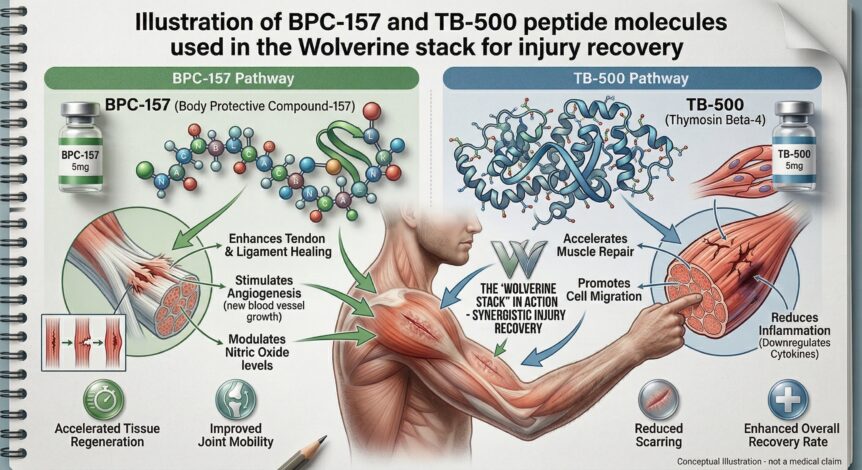
Related Topics KLOW Dosing Calculator The 4-peptide variant with KPV for reactive or post-procedure skin Injury Recovery Peptide Protocol Five-compound structural repair framework including NAD+ metabolic support BPC-157 + TB-500 Wolverine Stack Simpler injury recovery stack centered on the two core repair peptides BPC-157 Guide Standalone dosing, pharmacokinetics, oral vs injectable TB-500 / TB-4 Guide Fragment vs full-length, CoA verification, threshold-saturation mechanism GHK-Cu Guide Copper peptide mechanism for skin and matrix quality NAD+ Guide Cellular energy support for intensive repair cycles Peptide Reconstitution Guide General bacteriostatic water and syringe handling Where to Inject GLOW Peptide Near-injury vs systemic injection routing References GHK-Cu tissue-organization signaling and copper-peptide complex TGF-/Smad matrix organization, lysyl oxidase cross-linking, SOD/catalase antioxidant expression, copper coordination chemistry, 4,000+ gene modulation: PubMed 29986520
We provide detailed analysis and support for all our research chemicals
The 2017 foundational studies confirmed that 5amino1mq reduces NAD consumption via NNMT inhibition, improves glucose clearance, and decreases fat accumulation.In subsequent years, the scope expanded: a 2021 study in obese mice validated its antiobesity effects, and 2024 research revealed improvements in muscle function in aged mice.To date, the compound remains in the preclinical research stage, with no largescale human clinical trials or FDA approval for human use